The Vitals
Accommodations: 13 nights camping, 3 nights housesitting, 9 nights hotels
The Trip
Townsville
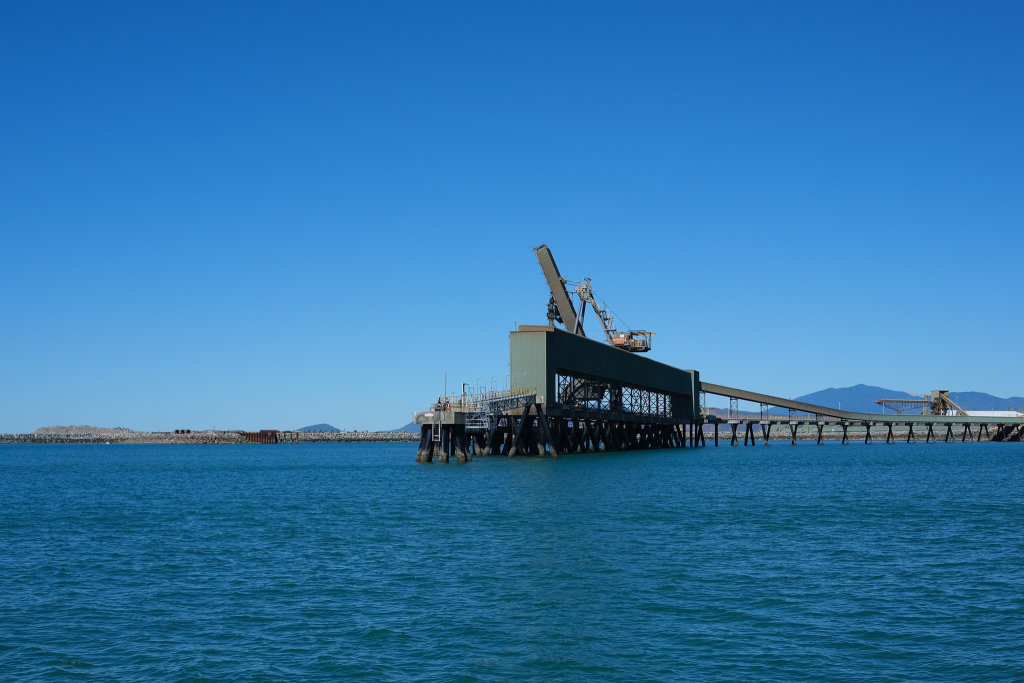
This section of the trip commenced with a drive from Bowen to Townsville through miles of sugarcane cultivation. This was the main farmed crop we saw for the remainder of the trip whenever we were near the coast. The sugar cane of Queensland is transported to refineries on a narrow-gauge rail network with 4000 km of track. We saw the locomotives and bin cars as well as an operating sugar refinery in Tully.
We didn’t know what to expect from Townsville. We had heard there was a lot of property crime and one old lady working at a tourist info center warned us to be careful on account of the murders. What we found during our housesit, of a big dog and an independent cat in the Douglas neighbourhood, were beautiful riverside walks beside the Ross River and a huge, free outdoor public swimming pool. The riverside came alive in the evening with walkers, dogs, joggers, and bikes when the hot days moderated somewhat and we saw one kid carrying the biggest fish I’ve ever seen caught from the pedestrian bridge near Black Weir. Our last outing in Townsville was along The Strand while we waited for our ferry to Magnetic Island. The parks and pools along the waterfront are an awesome resource with stellar views of blue water and islands.
The time between our housesit and three nights on Magnetic Island was punctuated by a one night stay at the nearby Alligator Creek campground in Bowling Green Bay National Park. It’s a fairly anonymous area but it is was nice to see a lot of different people enjoying a cool evening down by the water in the tropical climate. The creek was running low but the rock formations and shady trees made it an enjoyable place to be. In addition, we saw five new bird species without really trying and passed some time talking to an older couple that were practicing their bike touring setups before an upcoming trip to Tasmania.
Magnetic Island
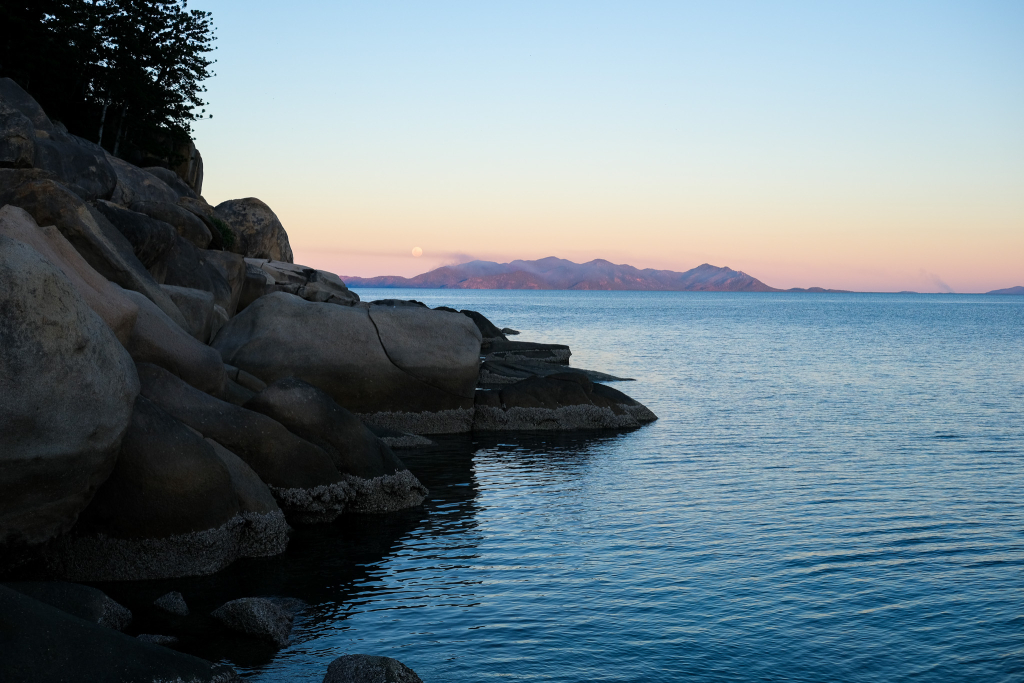
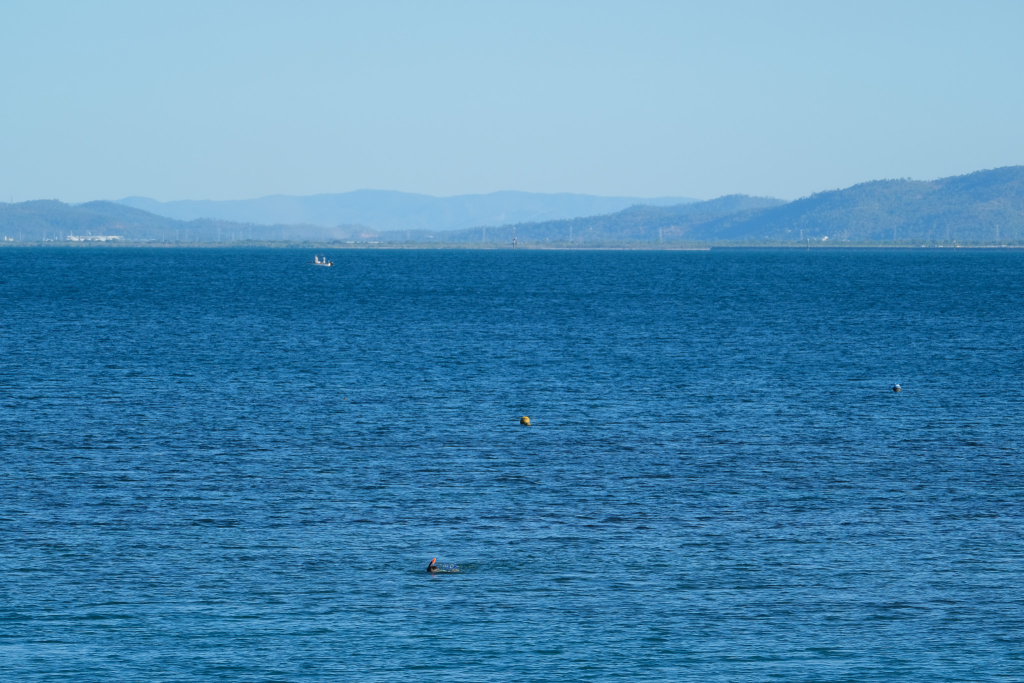
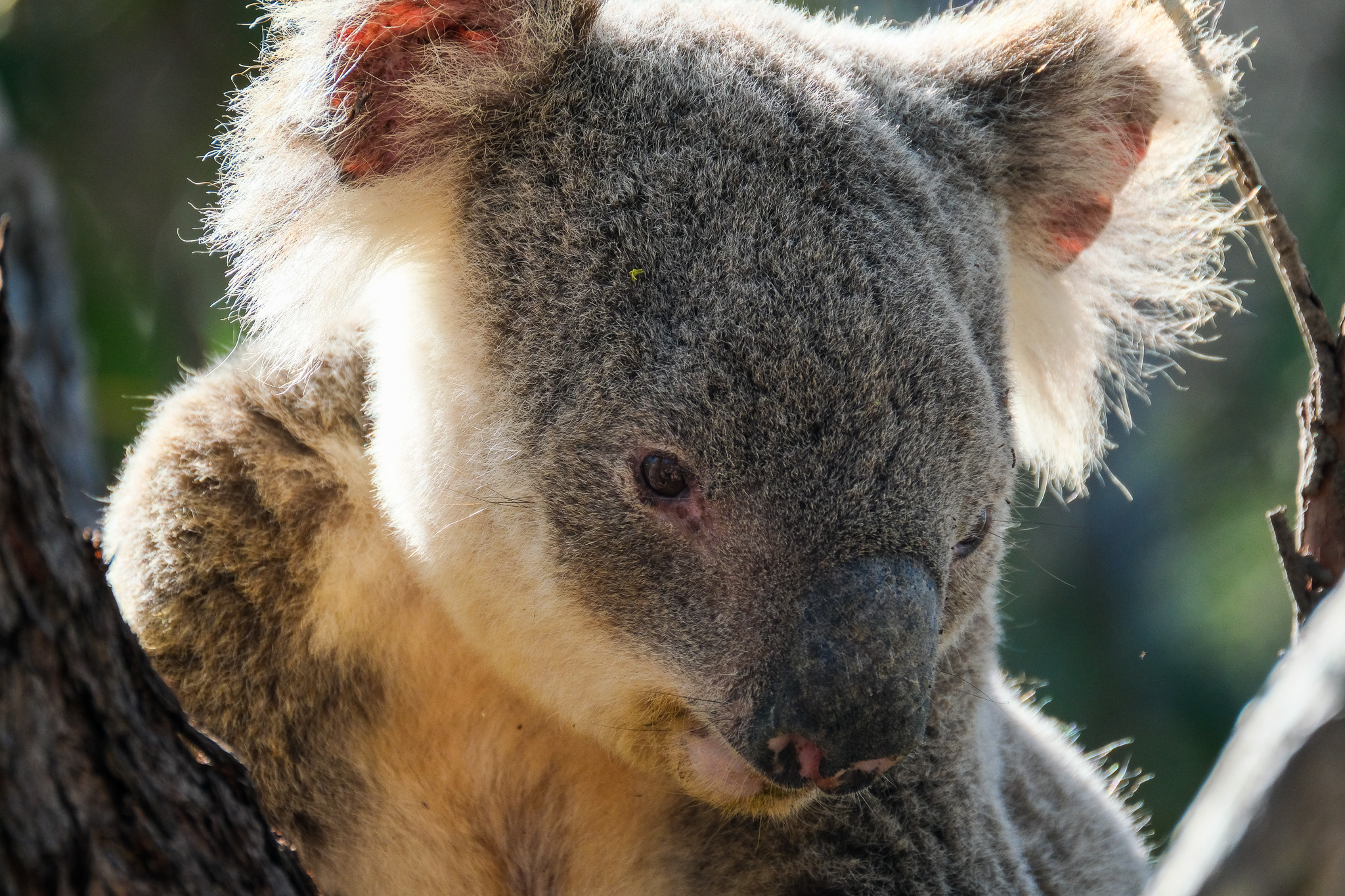
Back to Townsville after Alligator Creek, we caught the car ferry to Magnetic Island as foot passengers, hauling the baby and all necessities by hand. The island is incredible as you approach. It’s a small island but it’s mountainous and covered with trees and rounded granite boulders called tors. We were staying in Arcadia just a few minutes from the ferry landing at Nelly Bay. It was the perfect base for us – very quiet, with only a few shops (we loaded up on groceries in Nelly Bay) but with swimming and snorkeling a short walk away at Alma Bay or Geoffrey Bay and a large population of rock wallabies at the old ferry terminal. It’s also a short bus ride to the Forts – WWII radar and gun emplacements that are also a good place to spot wild koalas.
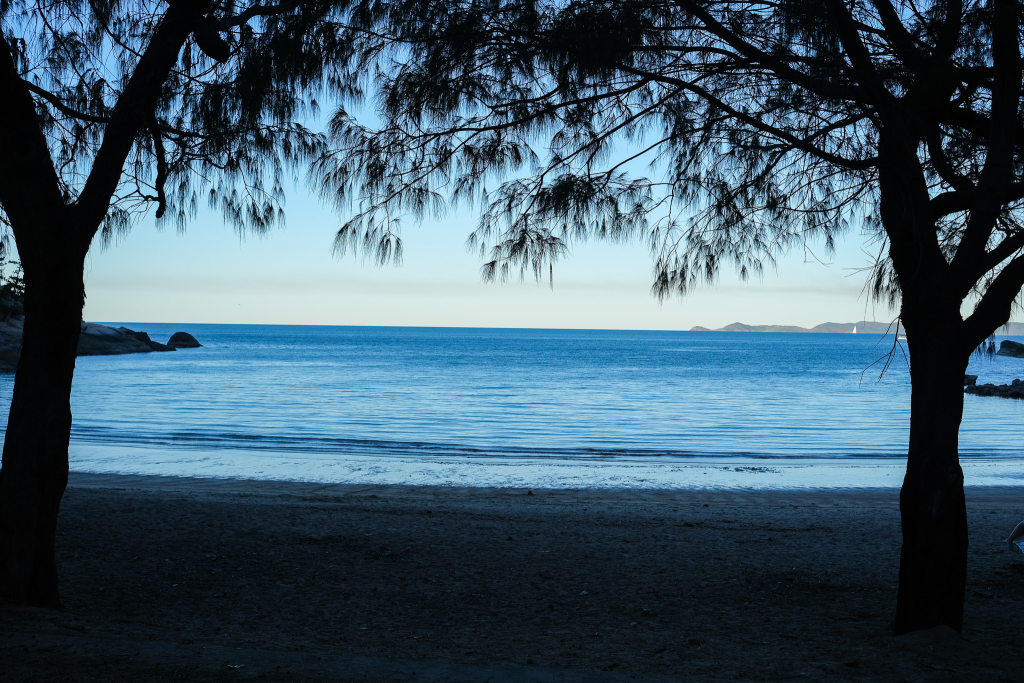
Our time on the island was active but relaxing. Lots of hiking and snorkeling (in turns) and good wildlife under blue skies and warm weather. We saw a few wild koalas at the Forts and giant clams on the Geoffrey Bay snorkel trail and lots of fish and corals. After three nights it felt like we were leaving a day too early but we had now had six out of seven nights indoors and it was time to get back to camping.

Atherton Tablelands
After schlepping our gear back on the bus and ferry to Townsville, it was time to pack up the campervan and shop for provisions for our upcoming week of camping. We weren’t at our best as we stopped at an Aldi in Townsville requiring four separate trips in and out of the store before we felt like we had everything. It was beginning to be a long day and we still needed to drive to our campsite at Big Crystal Creek. Luckily, the campground wasn’t far off the highway and we were set up by late afternoon. While not the most beautiful campground, it was at least shady and the Paradise Waterhole was a pleasant place to cool off before dinner.
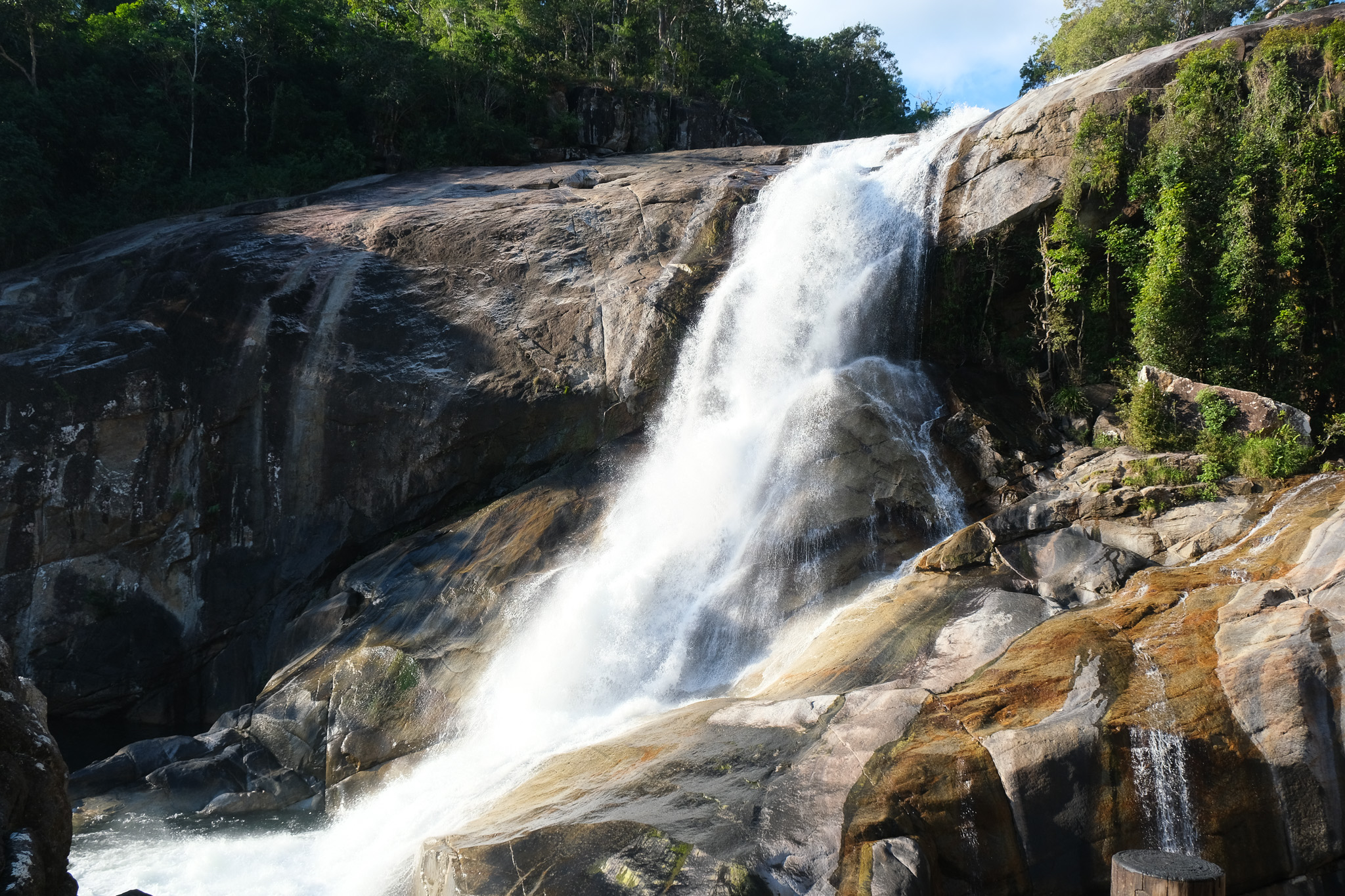
The next day we drove to Murray Falls campground with a lunch stop in Ingham at the TYTO wetlands. We only stayed one night here but regretted that we didn’t make it two when the next campground (Henrietta Creek) was inferior. The camping area at Murray Falls was large but quiet and the falls were spectacular. Even better was the hot weather but beautiful swimming area below the falls.
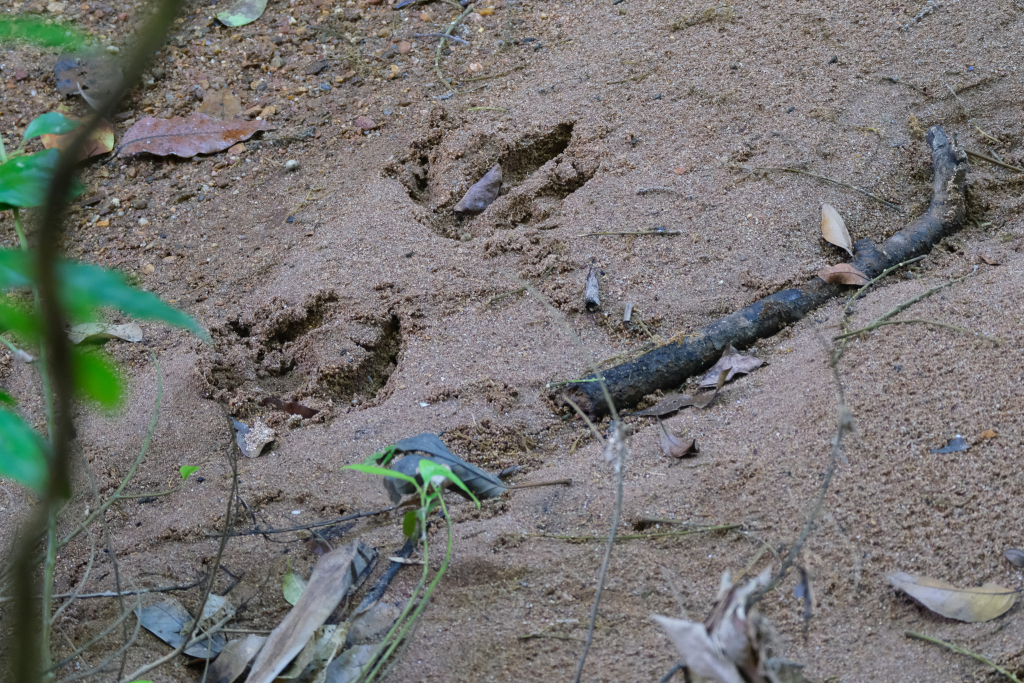
It would have been nice to spend another day relaxing and swimming. Alas, we continued on to Henrietta Creek via Mission Beach. This was a nice seaside community of four towns spread along 14 kilometers of coast and is a great place to find the southern cassowary. We tried our luck at Lacey’s Creek day use area and found cassowary prints in the sand and poop but didn’t see the birds. In town, we picnicked on the beach and got more tips on where to find cassowaries but we wound up skunked.
Driving to Henrietta Creek from Mission Beach, we started climbing to higher elevations with farmland that was all carved out of what was once rainforest. We were supposed to stay at Henrietta Creek for two nights but after one damp night and doing the only hikes, we were keen to move on. The silver linings were discovering Chowchillas, spotting a few Wompoo Fruit-Doves (huge and colourful – a top five bird of the trip), and spending a couple of hours identifying a female Victoria’s Riflebird. This was the bird on which I spent the most time to get a confident identification. I didn’t know where to start and was convinced it was a type of honeyeater because of the large, decurved bill. It didn’t help that the females and males look different and that the books usually focus on the males. It was a triumph to finally figure it out.
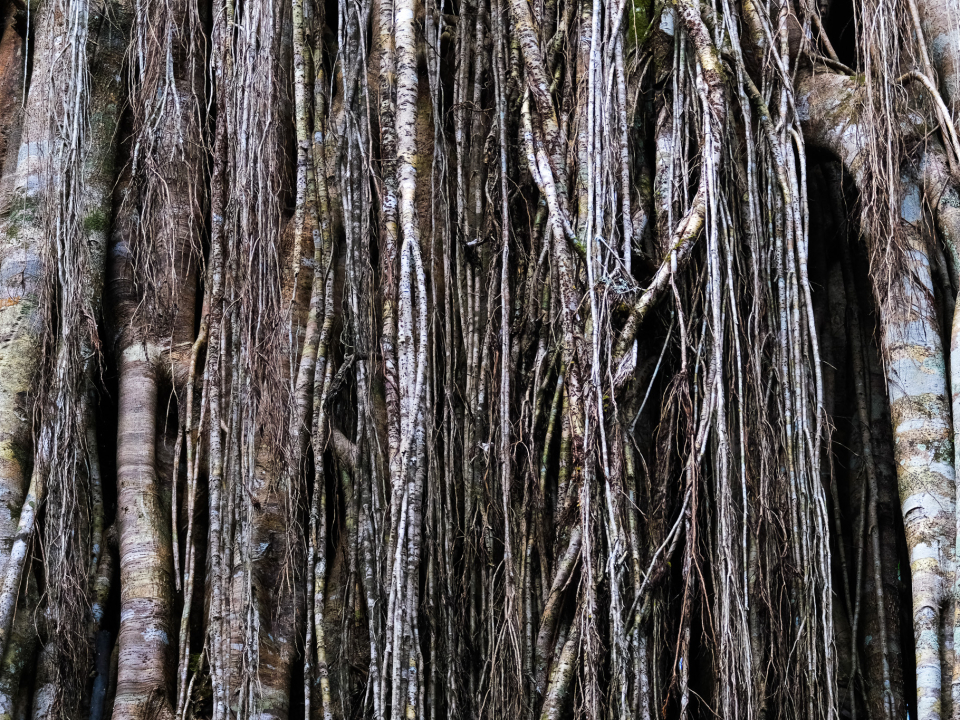
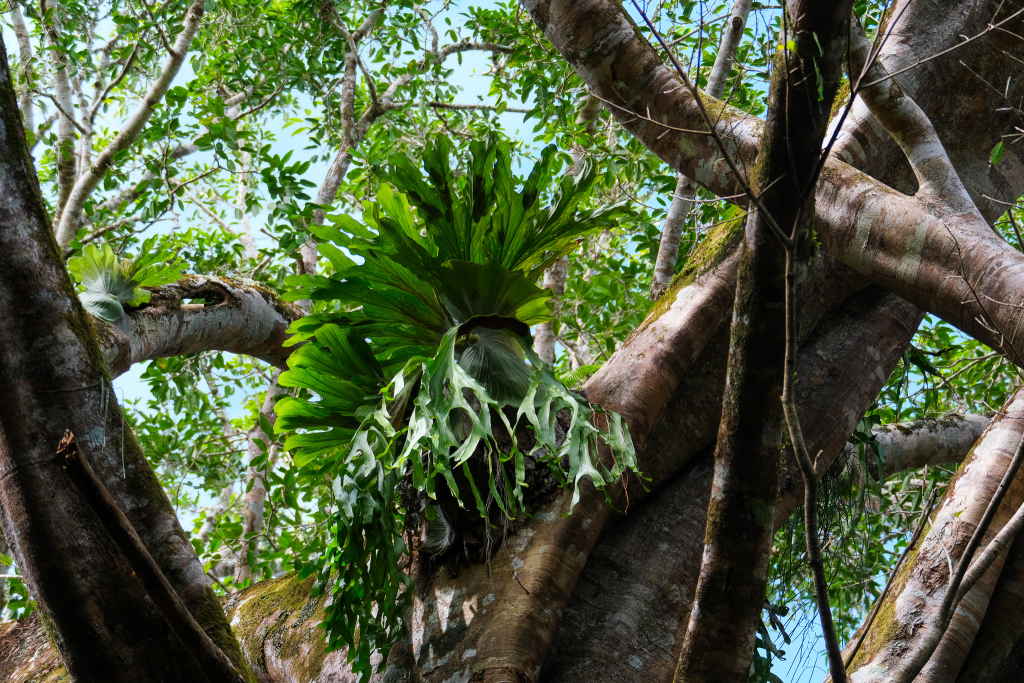
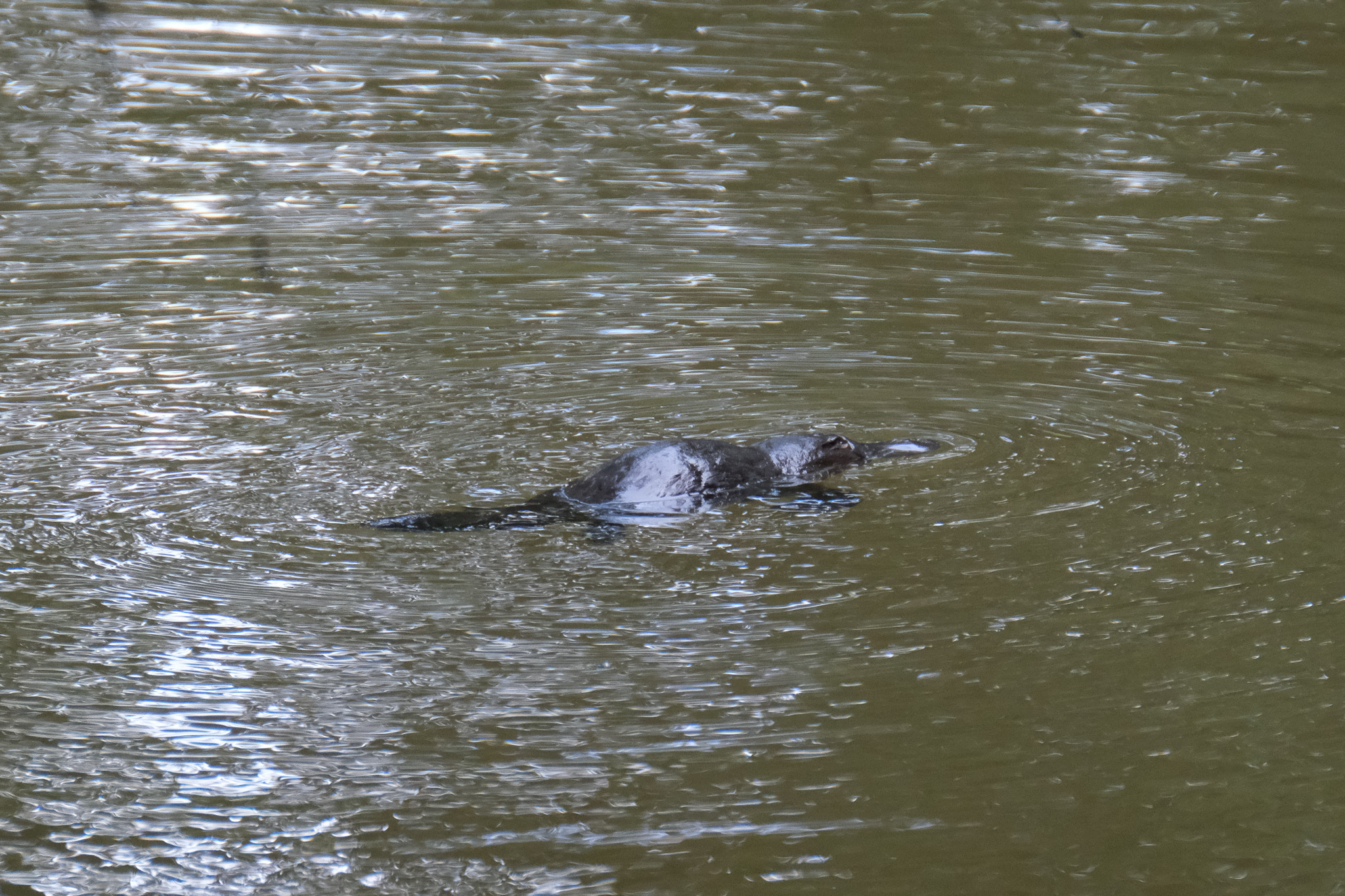
From Henrietta Creek we camped for three nights near Lake Eacham (one of two volcanic crater lakes along with Lake Barrine) in off and on rain. We hiked around each of the lakes, checked out some waterfalls, and kept finding ourselves back in the vicinity of Yungaburra. Here we saw another platypus in the daylight (see wildlife photos at the end), the majestic curtain fig tree (see main photo at the top), many new birds at Peterson Creek, and bought huge avocados for 50 cents. Three nights was one too many for us as this area seems more apt for wining and dining tourism, but we filled our time nonetheless.
Port Douglas and the Daintree
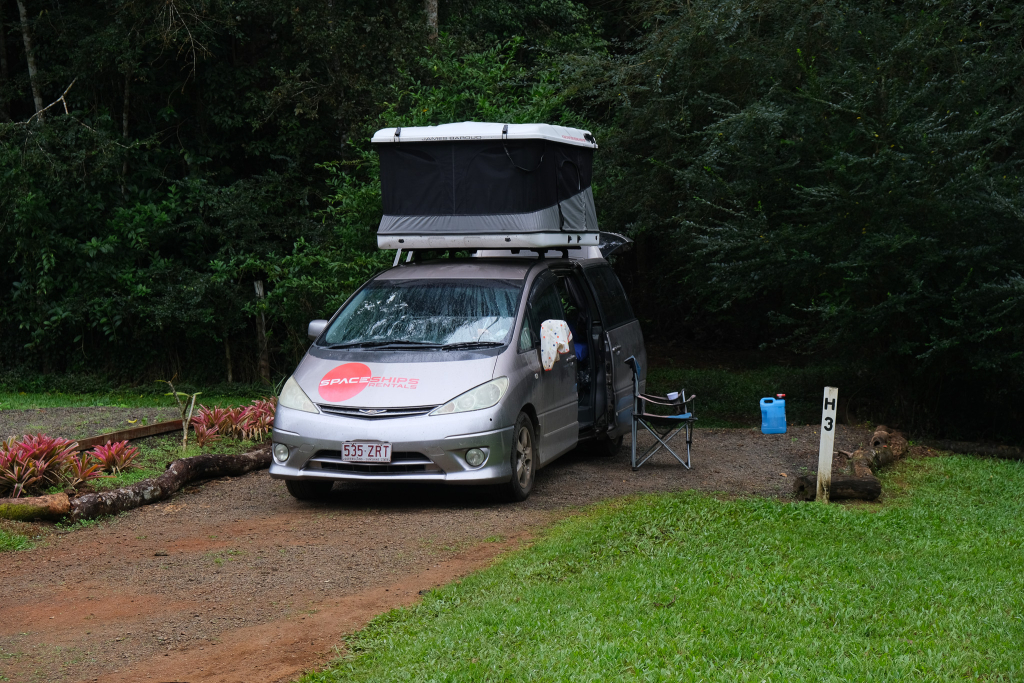
After the rain of Atherton, we started heading for Port Douglas to take a few nights in a hotel and do our laundry before the last week of camping of the trip. We stretched the two hour drive over two days with a stop at the campsite at Rifle Creek in Mount Molloy. This was another well-used but well-respected campsite that had a suggested donation of $2.
On the final leg to Port Douglas, we dropped from the higher elevation plateau through waves of rain on the twisty highway before being spit out at the straight and flat Captain Cook Highway. We spent three nights in Port Douglas in a rented apartment, hiding inside when torrential downpours passed through, and checking out the beaches and town when it was dry. One day we visited the nearby Mossman Gorge National Park which was the most developed and busiest national park we had seen. We walked all the rainforest trails and admired the swimming but its popularity probably stems just from its proximity to other tourist destinations.

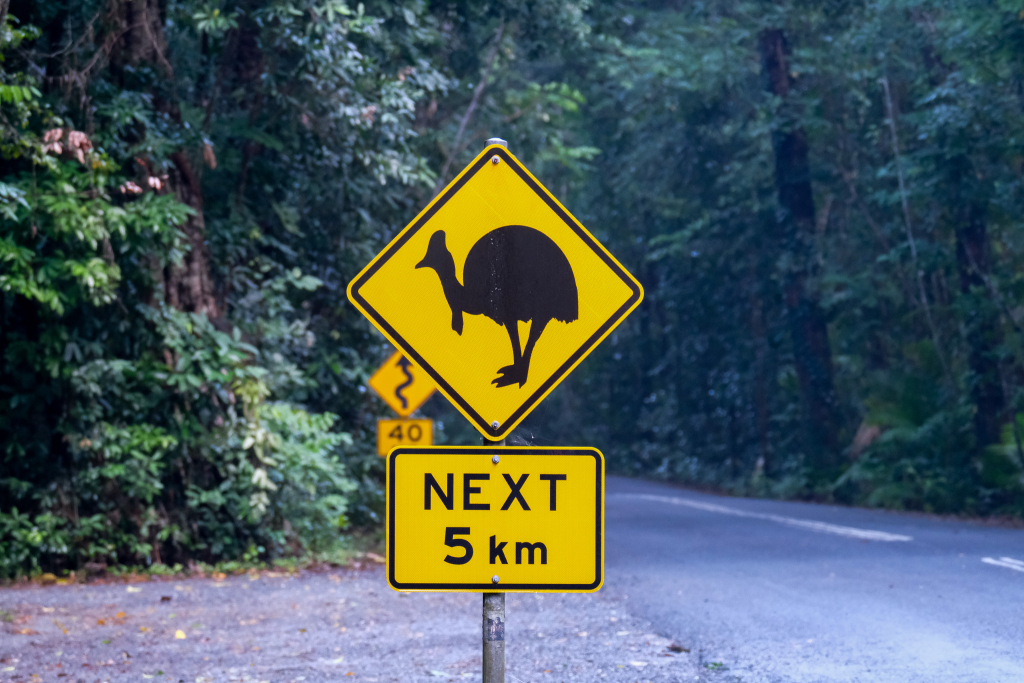
The day we left Port Douglas to cross the Daintree river had another black sky that got more ominous as we headed north. The river crossing is efficient and takes you to the one road on the other side in the Daintree rainforest – the “world’s oldest living tropical rainforest”. As soon as we were on the north side of the river, it began to pour rain. We drove to our campsite at Noah Beach and saw our first cassowary on the side of the road! A brief look but gratifying after our earlier fruitless searches. The campground is in the trees and was sodden but in the afternoon it stopped raining and a pair of adult cassowaries slowly worked their way through the camping area giving us plenty of time to observe them and appreciate the sheer size and the thickness of their necks and legs. Not quite as tall as emus, the cassowary is much stouter and it’s exposed red and blue skin and bony crest give it a no-nonsense look.
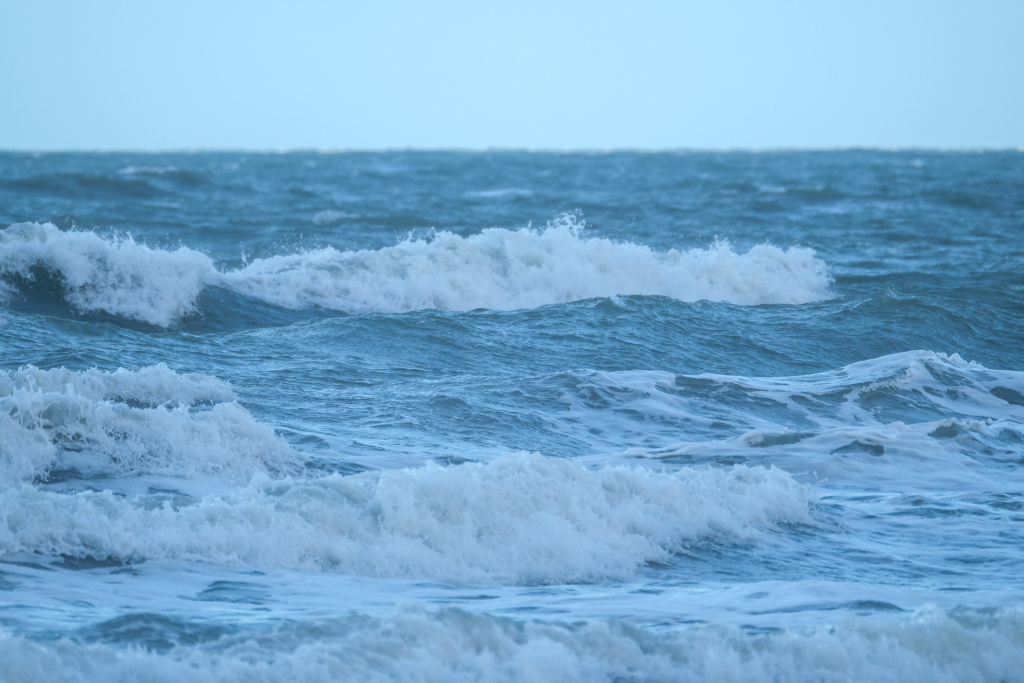
In the evening we walked up and down the gorgeous Noah Beach that was practically deserted. The rough sea and grey skies helped us imagine why the nearby town is called Cape Tribulation. The next day we drove the rest of the paved road and hiked a couple of short boardwalks (the Madja Boardwalk through the mangroves was the highlight) before returning to Noah Beach. The rain returned in the evening and through the night so in the morning we decided to abandon our third night and head south once again. On our way to the ferry, we saw a male cassowary with two adolescents and stopped for photos. Unfortunately, technical difficulties prevented us from capturing a good one.
Final Camping and Cairns
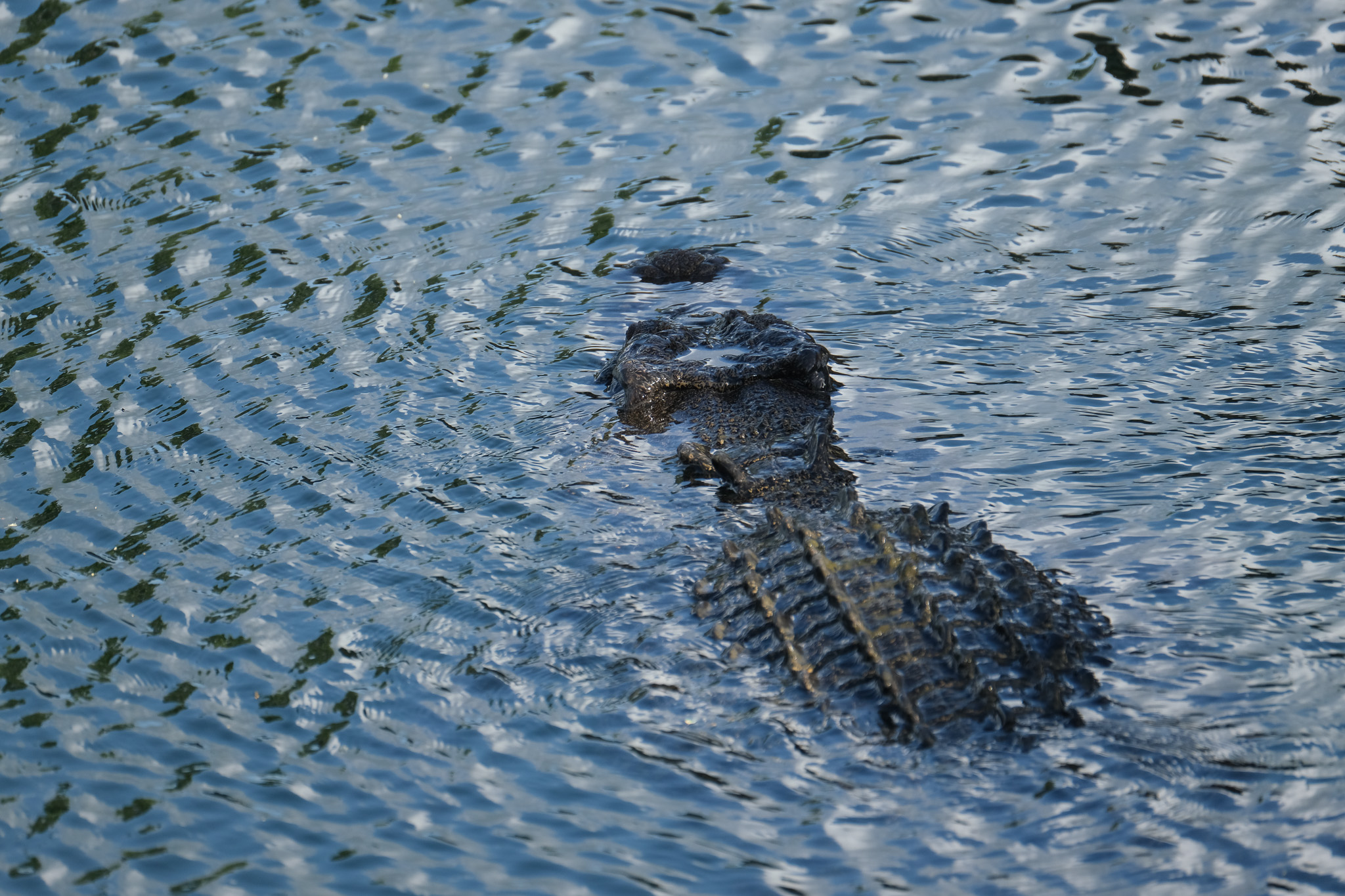
Once we crossed the Daintree river, the weather improved with sunny skies the remainder of the day. We had skipped breakfast in favour of packing up the van in the wet so just south of Port Douglas we stopped at the Mowbray River, which is a good place to see saltwater crocodiles. When we arrived at the parking lot, one other person was there who stopped us and told us the best way to see one. We followed her advice and were immediately rewarded with a croc surfacing in front of us, barely above the water (see wildlife photos at the end). We also saw a wave in the otherwise still water from what was presumably another croc swimming below the surface. We spent another 90 minutes at Mowbray as dozens of people came and went without another crocodile but just before leaving, one appeared for a few more minutes. We watched until it disappeared for good then jumped back on the scenic, but construction-filled, Captain Cook highway heading for Speewah Conservation Area.
In Port Douglas we had looked ahead and seen a dearth of good camping options along the coast near Cairns. There were no national parks and the holiday parks looked crowded and expensive with minimum stay lengths as long as five nights. Fortunately we discovered the Speewah Conservation Park in the mountains near Kuranda, about 45 minutes from Cairns. It only has three unpowered campsites but we were able to book one for three nights on short notice.
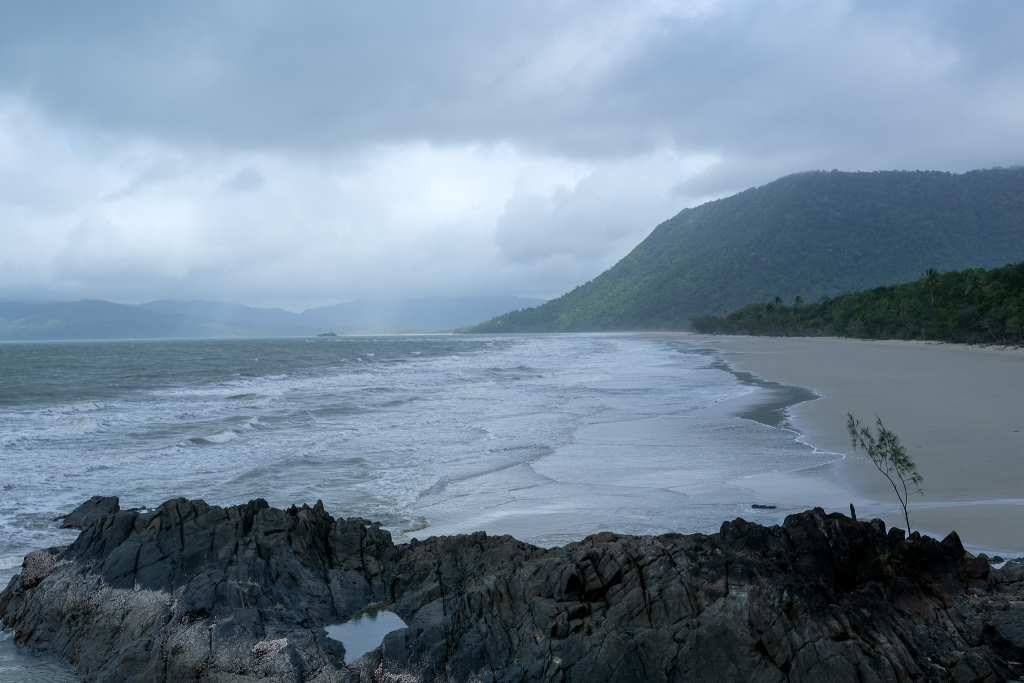
The campground flies a little under the radar and everyone who came through during our three nights were only there for one. We used Speewah as a basecamp to check out the town of Kuranda (awesome boardwalk to view the impressive Barron Falls, otherwise a tourist trap town) and for a couple of longer hikes through the adjacent Barron Gorge National Park. These hikes lacked novelty after several weeks in the same environment but the temperatures were pleasant and we saw only one other person in several hours. It was once again raining off and on and we nearly left Speewah early but we stuck it out, passing one last wet morning in the van, to bring our total nights camping to 29.
The final destination before the return to Canada was Cairns. We didn’t expect much and envisioned most of our time being spent on chores like returning the rental van but low expectations allowed Cairns to over deliver. The esplanade next to the sea gave great views of the mangroves to the north and the mountains to the south and west. It also had another large public pool at the south end for the baby to play in. After our exploration of the esplanade and downtown, we went to the gated complex where we had rented an apartment. The complex contained 4 pool areas with artificial sand beaches and was walking distance to the botanic gardens. We spent the final days easily completing our chores and took three trips to the botanic gardens and surrounding parks. Cairns turned out to be the perfect base to wrap up the trip.
From Cairns we flew to Brisbane and stayed overnight at an airport hotel before embarking on our 24 hour itinerary to Toronto via Vancouver. Brittany had been dreading this leg for weeks but the baby held it together and we made it through relatively smoothly to embark on five weeks of family time in Ontario.
The campervan trip to Queensland was largely a success. The baby’s needs shaped each day’s itinerary but we were able to camp and hike as much as we had hoped. The tedium of packing/repacking the van, the early evenings (sunset was between 5:00 and 6:00 each day), and the unusually rainy June (some precipitation every day for 12 days) did begin to drag towards the end but the hotel stay in Cairns reinstated our good humour and we were proud to persevere spending nearly a month of nights in the van.
Birds and Other Wildlife
There were lulls in this section where I didn’t see many new birds or the photos were turning out poorly (three sightings of 6 individual southern cassowaries is a case in point). However, the last evening in Cairns brought two unique species (Metallic Starlings, Radjah Shelduck) and one last visit to the wetland park on the final morning revealed a Little Kingfisher (bringing the total kingfisher count to 6 including two species of kookaburras).
Our 100th bird was a Spectacled Monarch at Big Crystal Creek and my favourite bird was the Pied Monarch. It’s just a goofy little guy with a blue eye ring and thick neck roll like a pug dog or a fur-trimmed robe of a king. Brittany’s favourite bird was selected from the book on one of our first days and in the north of Queensland we began to see them somewhat regularly: the Rainbow Bee-eater.
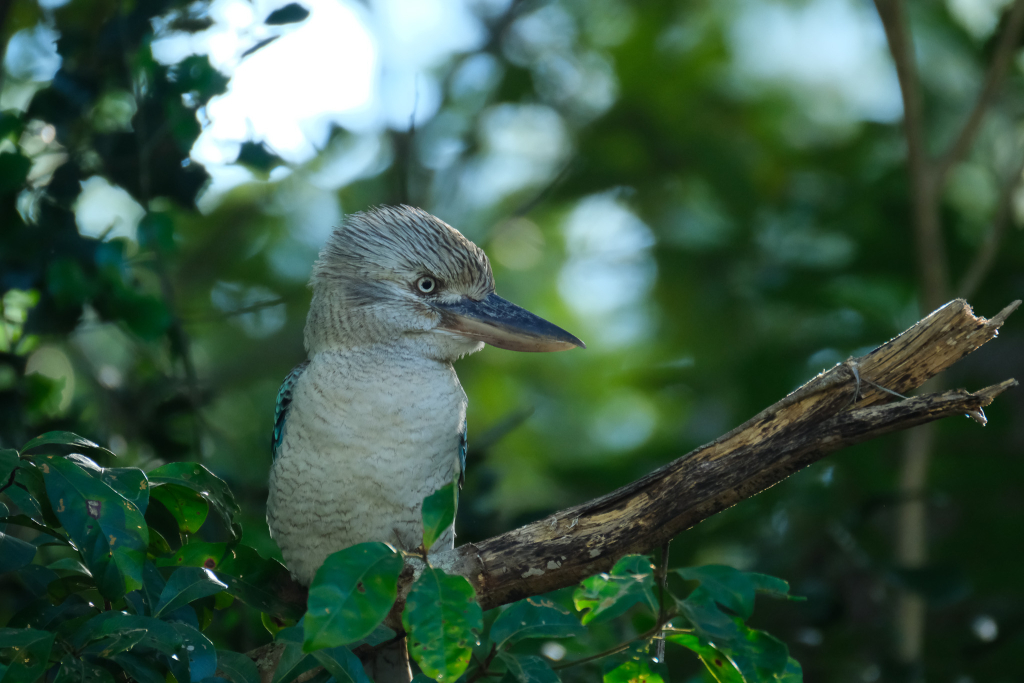
Blue-winged Kookaburra 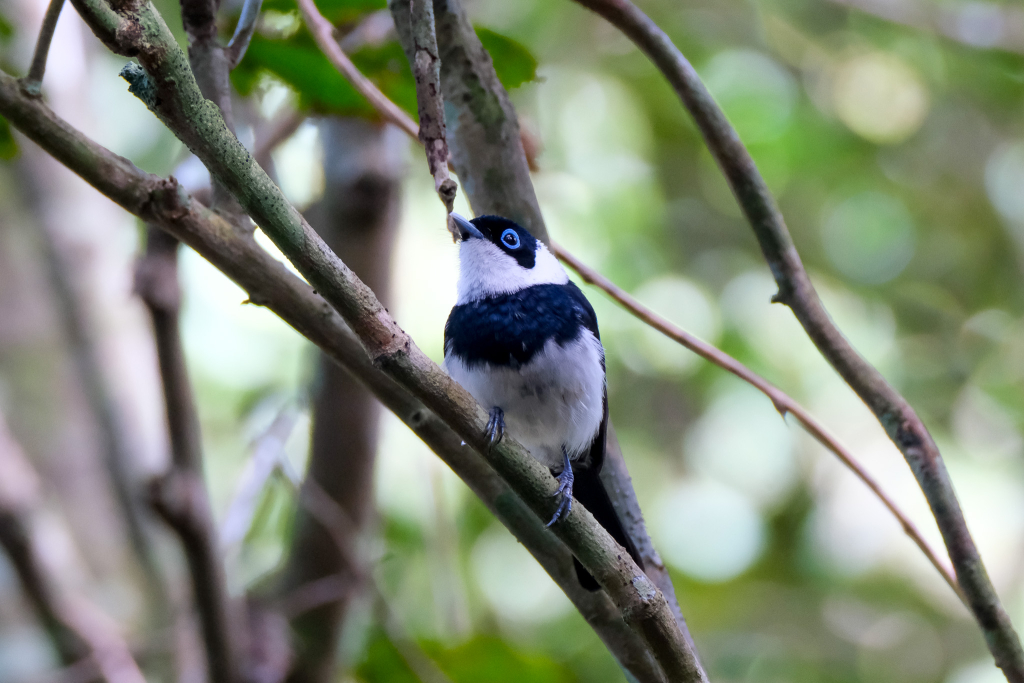
Pied Monarch (my favourite bird) 
Rainbow Bee-eater (Brittany’s favourite bird) 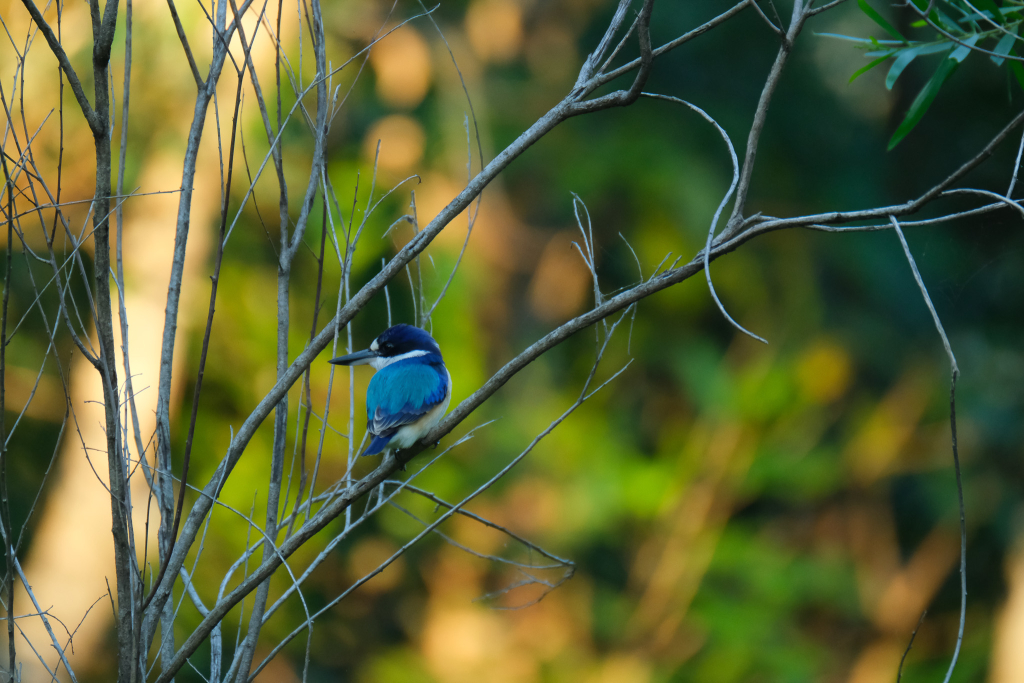
Forest Kingfisher 
Sacred Kingfisher 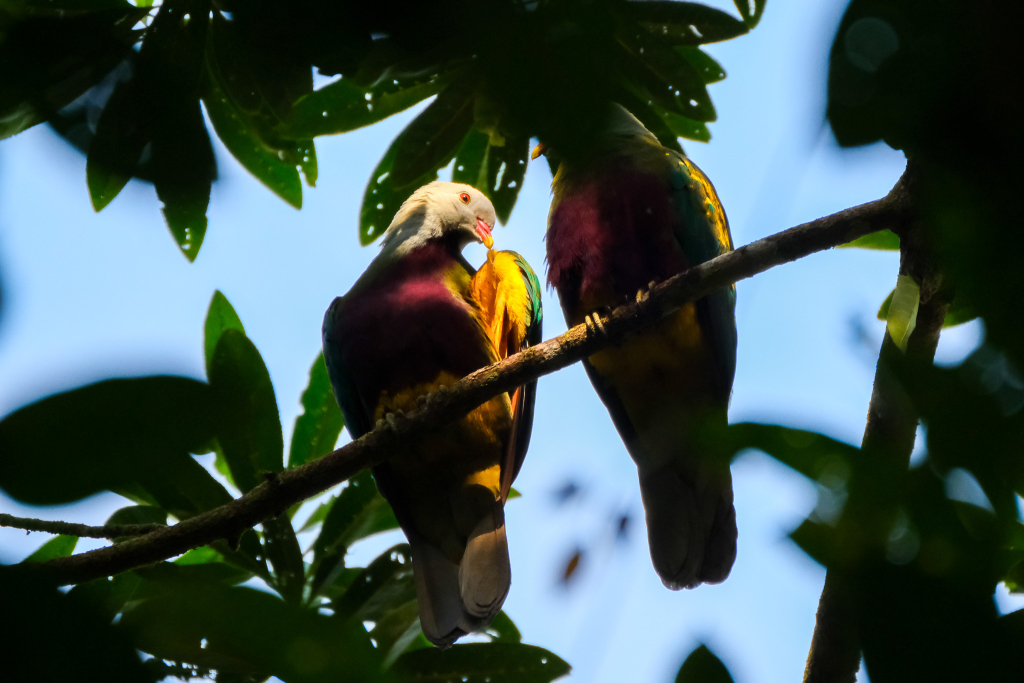
Wompoo Fruit-Dove 
Sahul Sunbird 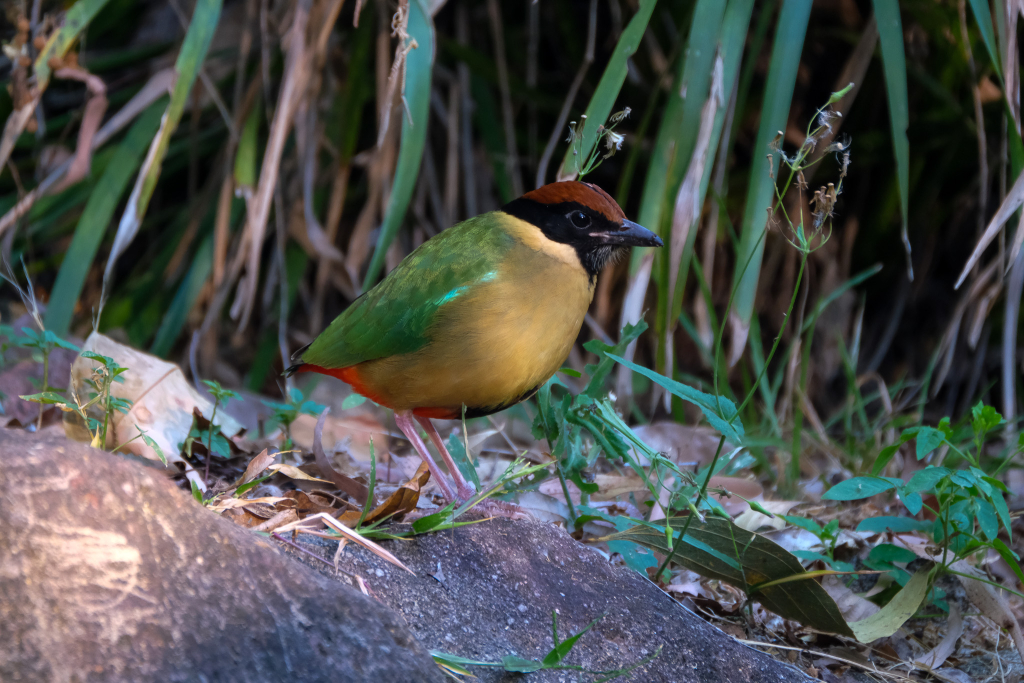
Noisy Pitta 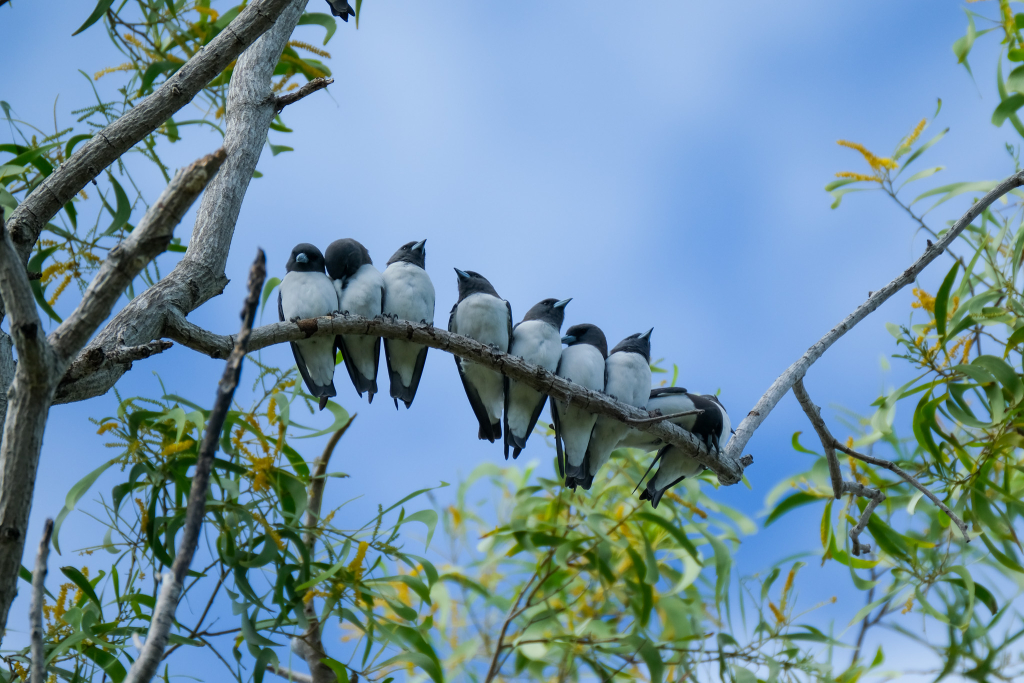
White-breasted Woodswallow 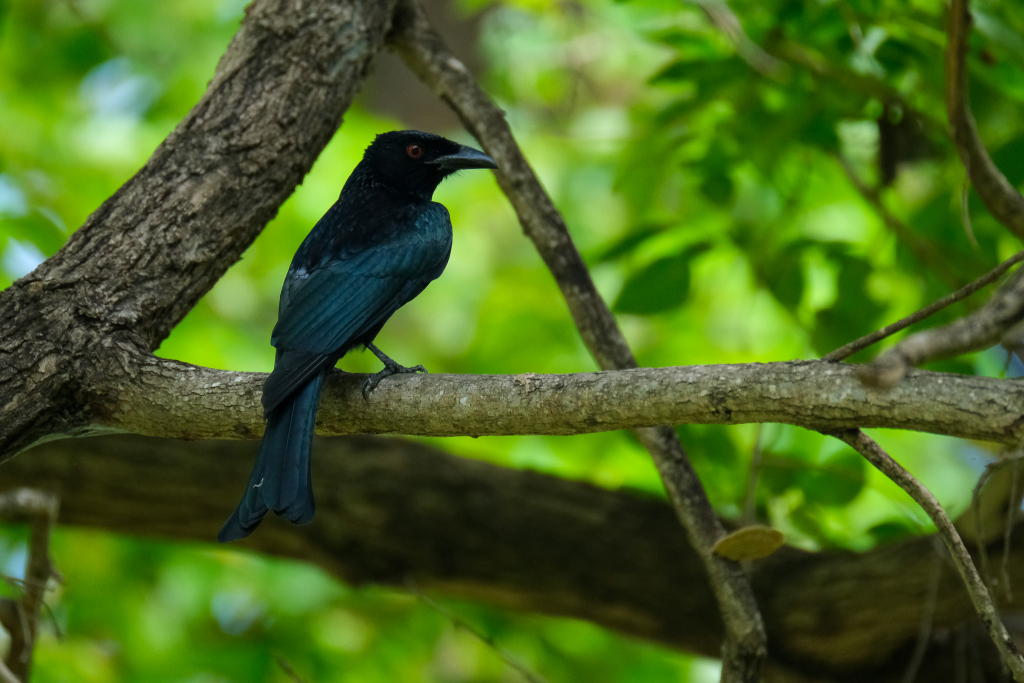
Spangled Drongo 
Brushturkey 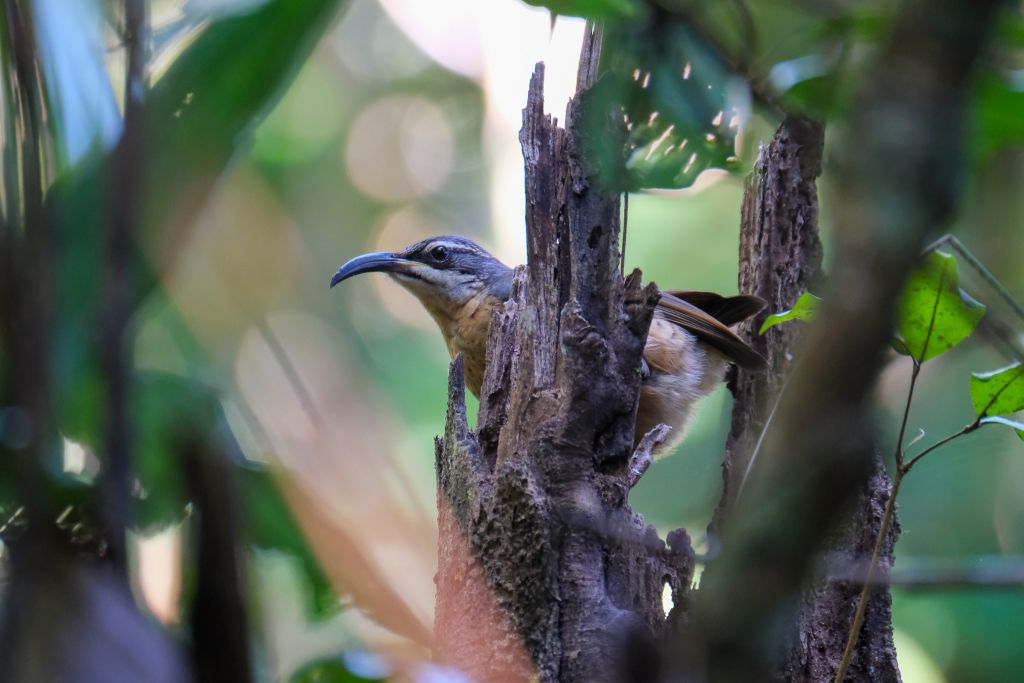
Victoria’s Riflebird (female) 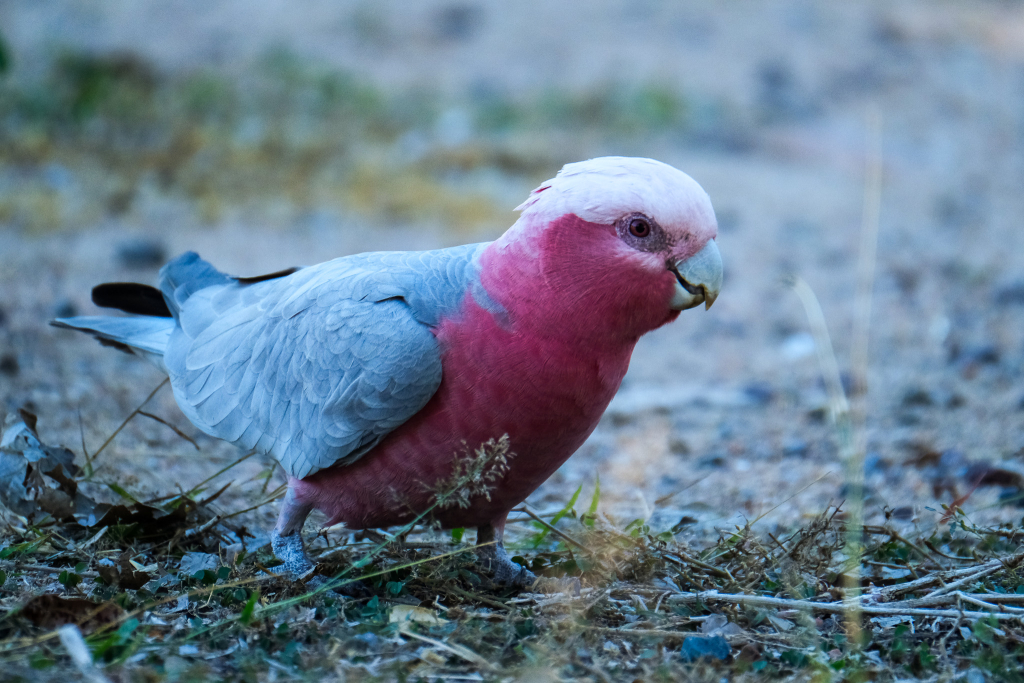
Galah 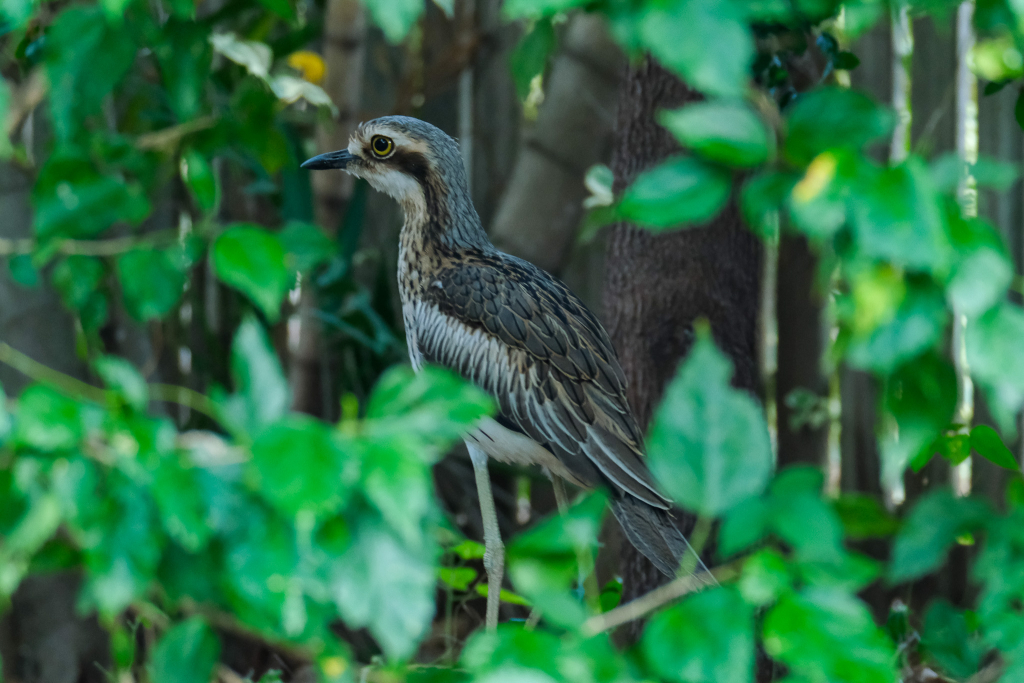
Bush Stone-curlew (Thick-knee) 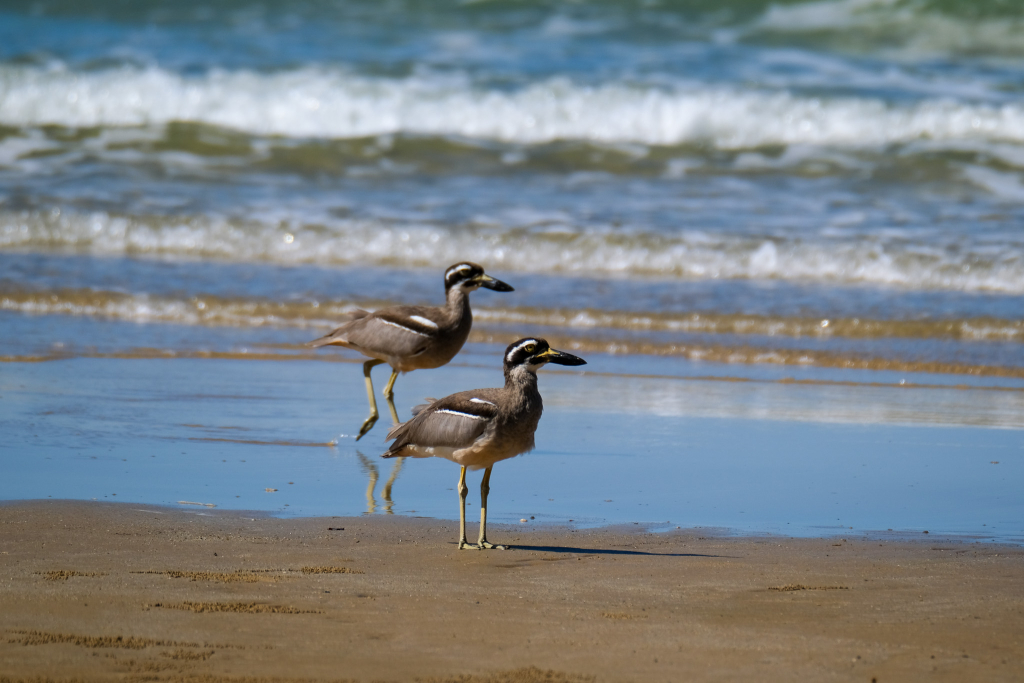
Beach Stone-curlew (Thick-knee) 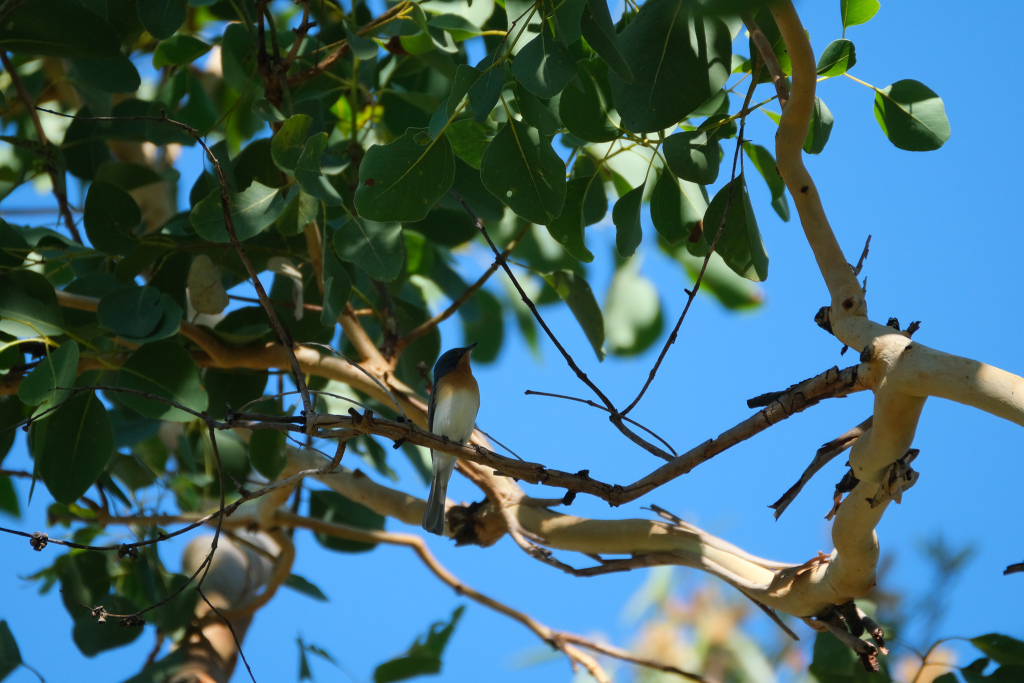
Leaden Flycatcher (female) 
Bridled Honeyeater 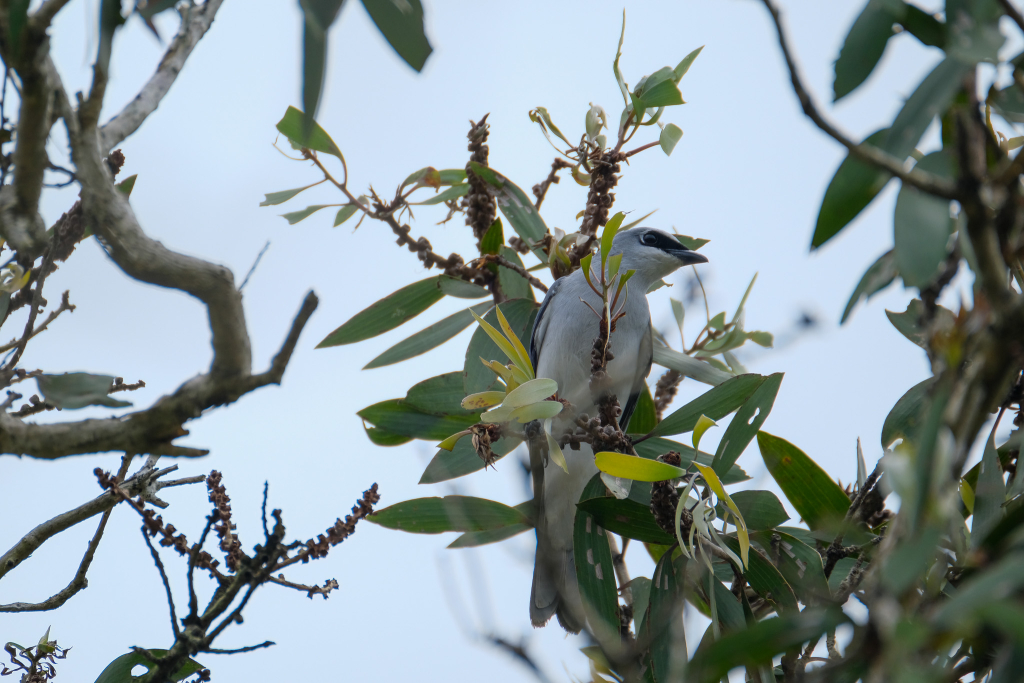
White-bellied Cuckoo-shrike 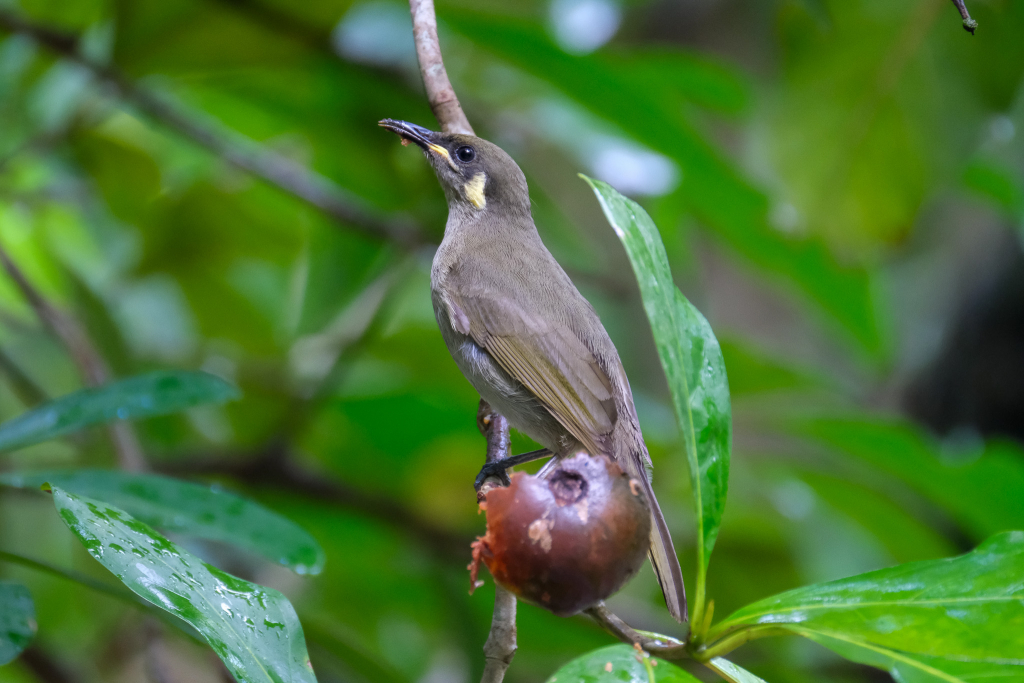
Yellow Spotted Honeyeater 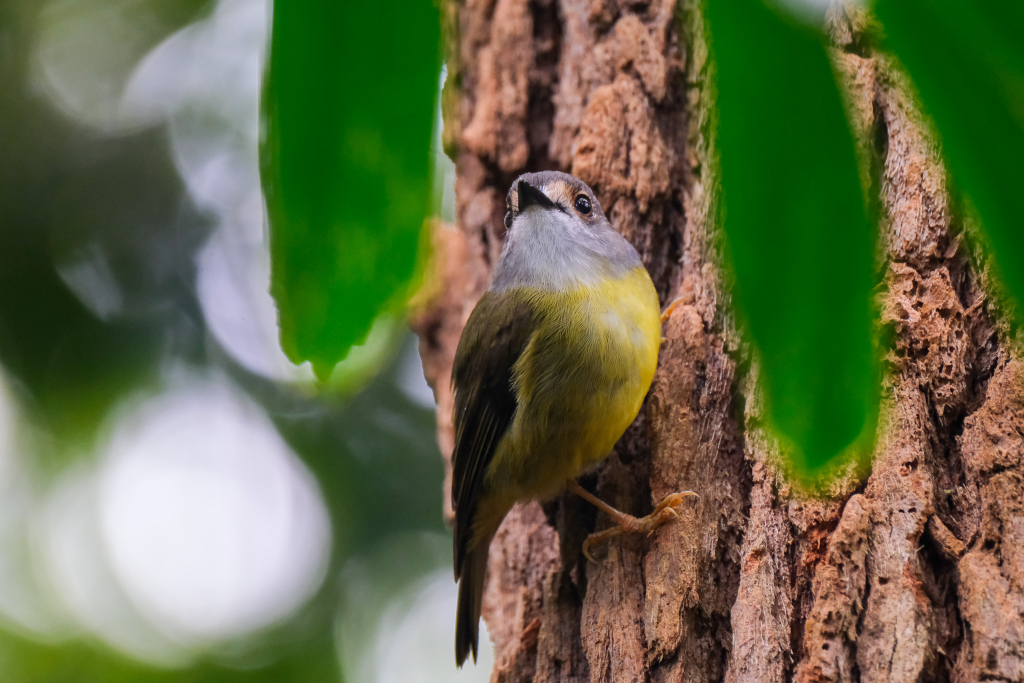
Pale-yellow Robin 
Australasian Figbird 
Southern Cassowary (best of a lot of poor photos)
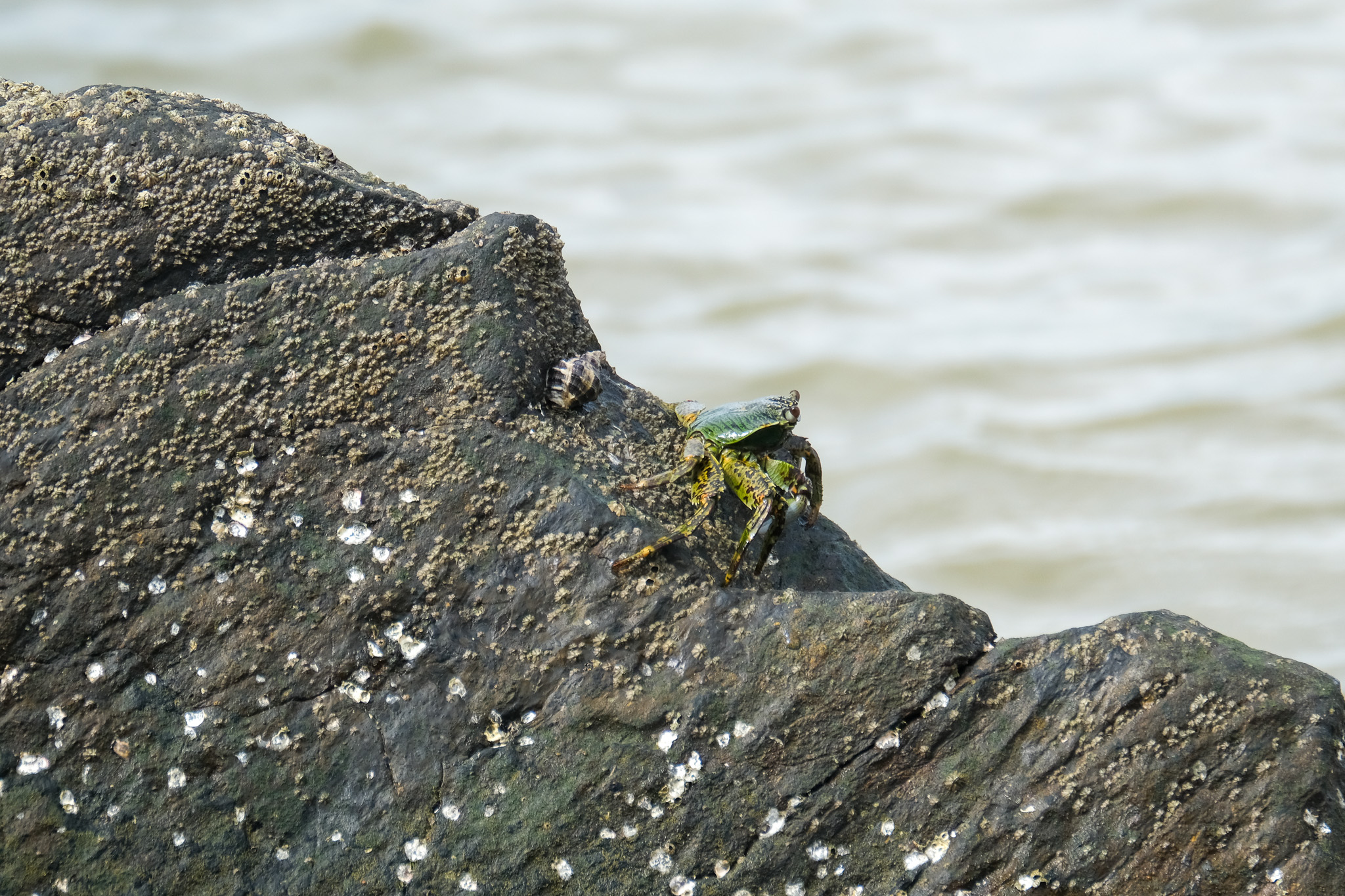
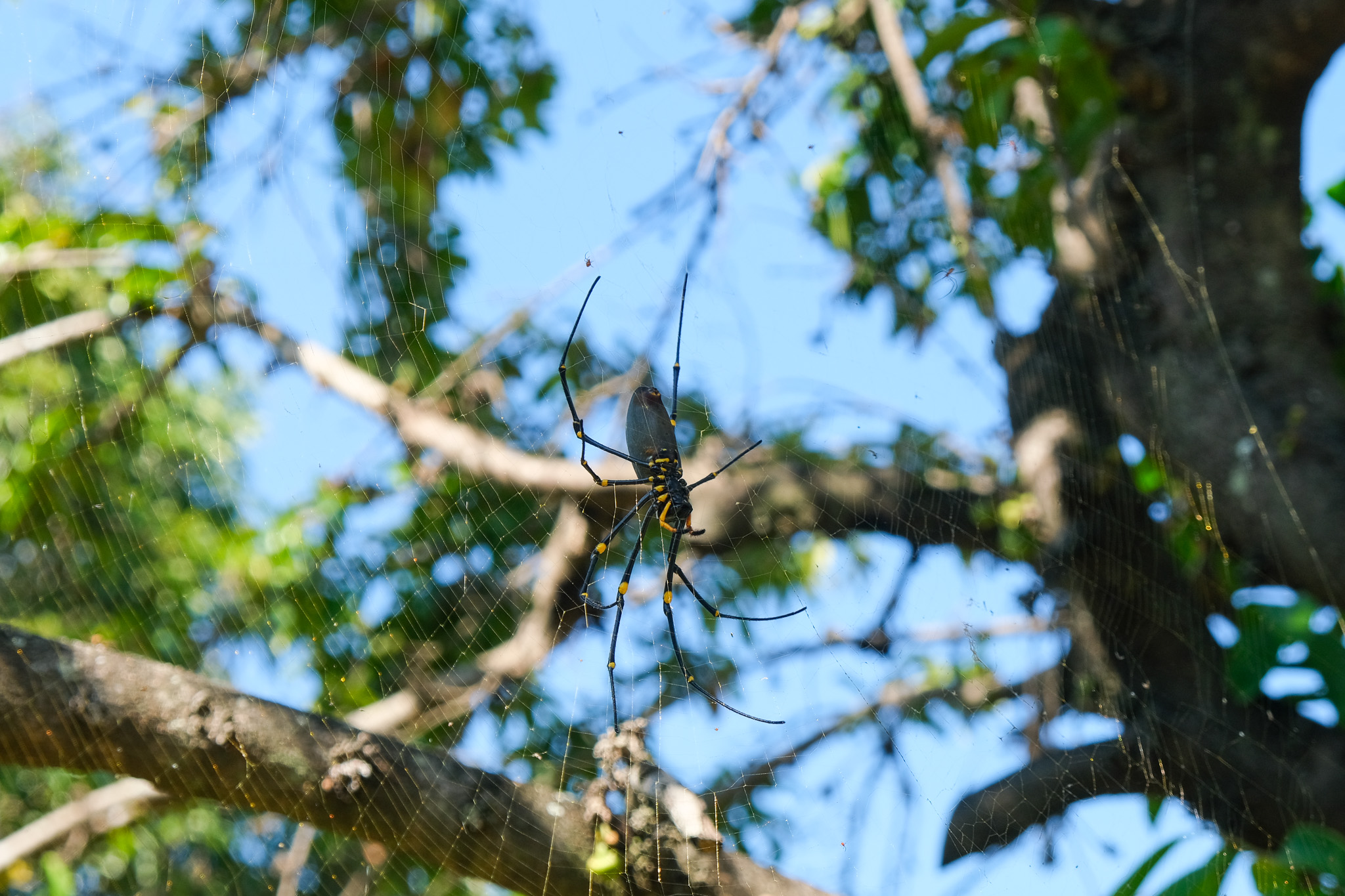
Other wildlife we found in the north were another platypus (photographed this time), rock wallabies, koalas, saltwater crocodiles, rat-kangaroos, Ulysses butterflies, and fireflies.


You must be logged in to post a comment.